
How to Plan and Prep for Outdoor Fun
 Stepping into the wilderness offers a sense of freedom, adventure and connection with the natural world. Whether you are scaling a rugged mountain peak, backpacking through dense forests or enjoying a serene weekend camping trip with your family, there can be physical and mental benefits of being outside. However, Mother Nature can be unpredictable, and environments can shift from idyllic to intimidating in a matter of minutes. Embracing the wilderness responsibly means making outdoor safety a top priority. Unforeseen weather shifts, sudden terrain challenges or briefly losing your bearings can quickly turn a fun excursion into a dangerous situation. By learning and applying practical safety tips for outdoor activities, you can help prepare yourself to handle emergencies with calm, collected confidence. From packing the correct gear to understanding the surrounding environments, these outdoor safety strategies can help keep you ready for adventure.
Know the risks before you go
Before you even lace up your hiking boots, the first step of any excursion should be assessing the risk of your chosen outdoor activities. This means objectively evaluating the specific hazards associated with the trail or environment, the time of year and your group's skill level and physical fitness. Are there steep, exposed drop-offs? Will you face potential avalanche zones or fast-moving river crossings? Understanding these environmental elements helps you to pack appropriately and decide if your team is ready for the physical challenge ahead.
The power of a plan
Planning is not only important for you, but it also helps to hand your trip itinerary to another trusted source in case of emergency. If things go awry, search and rescue teams need to know where to begin looking. Your itinerary should include:
- Start and end points
- Planned route (including any alternative trails you might take)
- Vehicle information (make, model and license plate)
- Date/time your emergency contact should call the authorities if you haven't returned.
Leave this document with a reliable friend or family member and stick to your planned route once you hit the trail.
Watch the weather
Clear blue skies at the trailhead do not guarantee sunshine at the summit. Monitoring weather patterns before hiking is an essential step. Check local mountain or park forecasts rather than relying solely on general city weather apps. Look out for warnings regarding incoming thunderstorms, high wind gusts or sudden temperature drops. Mountain weather is notoriously fickle. If the forecast predicts severe conditions or high lightning risk, postponing your trip is a smart decision. The mountains will be there tomorrow.
Gear you need before you go
Every adventurer should familiarize themself with the ten essentials for wilderness survival. The National Park Service recommends building on this list depending on the outdoor activity you're about to do.
- Navigation: Topographical map, compass and GPS device
- Illumination: A reliable headlamp or flashlight with extra batteries
- Sun protection: Polarized sunglasses, broad-spectrum sunscreen and UPF clothing
- First aid: A well-stocked kit tailored to your group size and trip length
- Knife and repair kit: A multi-tool and heavy-duty tape for gear repairs
- Fire: Waterproof matches, a lighter and reliable fire-starter cubes
- Shelter: An emergency bivy sack or a reflective space blanket
- Extra food: Enough to sustain you for an extra day
- Extra water: Plus a reliable water purification method (filter or tablets)
- Extra clothes: Additional layers to survive harsh weather for your specific region
What to pack for shorter trips
It is a common misconception that you only need a heavy pack for multi-day expeditions. The recommended gear for day hikes overlaps with the ten essentials listed above. Even if you only plan to be out for three hours on a local, familiar trail, a twisted ankle could easily force you to spend the night in the woods. Always carry ample water, headlamp, warm layer, high-calorie snacks and first aid kit on every day hike.
Why proper equipment matters
High-quality safety gear can not only add to the comfort of the activity, but it can also help reduce the risk of injury. Invest in the right clothing and accessories to help enhance the experience.
- Well-fitted footwear with proper tread can prevent slips on muddy or rocky terrain.
- Trekking poles can help reduce joint strain on descents and improve balance during tricky water crossings.
- Moisture-wicking layers (merino wool or synthetics) can help regulate your core temperature. Avoid cotton that can retain moisture and increase the risk of hypothermia in chilly, windy conditions.
How to navigate the wild
While GPS apps on smartphones can be convenient, lithium batteries may die quickly in the cold, and touch screens are less helpful in heavy rain. Because technology can fail, navigating with a map and compass remains an important tool and knowing how to properly read them is still a helpful skill to master. Before hitting the trail, learn how to read topographic contour lines, orient your map to true north and take a bearing. Having an analog backup can help you find your way back to your car, regardless of technological hiccups.
Communication devices to consider
When deciding between a satellite messenger vs. cell phone for emergencies, remember that cell service can be unreliable in certain spots, especially in the backcountry. A smartphone is still useful for taking photos and tracking your route on downloaded maps, but a dedicated two-way satellite messenger or a Personal Locator Beacon (PLB) can be a more reliable lifeline. These rugged devices use global satellite networks to send SOS signals directly to international rescue coordination centers. They are more likely to operate in deep, remote canyons or dense forests where your cell phone may lose service.
What to do when you're lost in the woods
Panic is not your friend in the wilderness. If you realize you have wandered off the trail and don't know your location, staying calm can make a difference. Survival experts recommend the STOP acronym:
- Stop: Sit down on a log or rock, take several deep breaths, drink some water and consciously clear your mind.
- Think: How did you get here? When was the last time you saw a familiar landmark, a trail blaze or another hiker?
- Observe: Look around for your own footprints. Check the time of day, assess the current weather and take inventory of your remaining supplies.
- Plan: If you are confident you can retrace your exact steps, do so slowly and deliberately. If you are disoriented, stay put. Wandering aimlessly can drain your energy and expand the search area for rescue teams.
4 SOS and signaling strategies
If you are stranded and waiting for help, utilizing certain emergency signaling techniques for hikers can help rescuers pinpoint your location faster.
- Carry a safety whistle. Blow three loud, sharp blasts in a row — the universal distress signal.
- Use a signal mirror (or the reflective screen of your smartphone) to flash sunlight toward passing aircraft or distant lookouts.
- At night, build three fires in an open area arranged in a triangle pointing toward your path.
- Flash your headlamp three times in a row.
The health benefits of hydration and first aid
Hydration is an important part of any day — especially when you're active. Hiking in warm weather drains your body's resources even faster. Recognizing the signs of heat exhaustion on trails can help prevent the condition from escalating into more serious issues, such as heat stroke. Stay aware of excessive sweating, physical weakness, dizziness, sudden nausea or vomiting, rapid pulse and muscle cramps. If you or a trail companion exhibits these symptoms, act immediately:
- Move to a fully shaded area.
- Loosen any tight clothing.
- Lay down and slightly elevate your legs.
- Slowly sip cool water and electrolytes.
How altitude affects water
Trekking in mountainous regions can complicate the journey with the challenge of thinner air. At high elevations, the body loses water through respiration up to twice as fast as it does at sea level. As you breathe the thin, dry air, your lungs work harder to pull in oxygen, causing you to exhale moisture at an accelerated rate. In addition, you could be losing water without even realizing it since sweat evaporates quicker in the dry climate. High altitude can also naturally suppress thirst. Try to force yourself to drink regularly. Consider adding hydration multipliers or electrolyte powders to your water to replenish essential sodium and magnesium lost to exertion.
Learn the basics of first aid
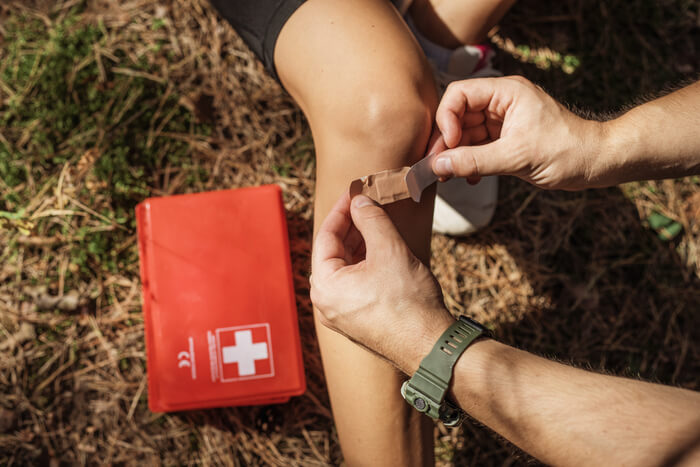
Even cautious and experienced adventurers suffer minor scrapes, bug bites and blisters. Treating minor trail injuries in the field helps prevent them from becoming painful infections or mobility issues later. For blisters, apply protective moleskin or specialized bandages as soon as you feel a hot spot forming — do not wait for the skin to bubble and tear. For cuts, scrapes and abrasions, clean the wound with sterilized water, apply a topical antibiotic ointment and bandage it securely to keep out dirt and sweat. Knowing how to perform these basic treatments is just as vital as carrying a first aid kit. Keeping environmental hazards and wildlife in mind Cultivating a keen outdoor awareness is one line of defense against natural hazards. This includes:
- Taking out your earbuds to stay aware of your surroundings
- Keeping your head up to watch where you’re going
- Regularly scanning the immediate environment
- Watching for tumbling rocks, slippery tree roots or shifting weather patterns
- Listening for rushing water or rustling bushes
Being present in the moment not only helps keep you safe but also enriches your connection to nature.
Know which flora to avoid
Nature is beautiful, but some of it fights back. Learning how to identify poisonous plants like poison ivy, poison oak and poison sumac can help save you from weeks of agonizing, blistering rashes. The adage, leaves of three, let it be is a starting point for identifying poison ivy and oak. If you accidentally brush against these toxic plants, wash the affected area immediately with cold water (hot water opens the pores) and specialized friction soap to remove the harsh toxic oils from your skin.
Be prepared for animal encounters
Sharing the woods with local wildlife is a privilege, but it requires boundaries and respect. Proactively preventing potentially dangerous wildlife encounters while camping helps keep both you and the native animals safe. The golden rule of bear country is proper food storage:
- Don't keep food, wrappers, trash or scented items (like toothpaste, lip balm or deodorant) inside your tent.
- Use bear-resistant canisters or hang a bear bag at least 10 feet high and four feet out from a sturdy tree trunk.
- Keep a meticulously clean camp area.
- Cook and eat your meals at least 200 feet away from your sleeping area.
You should also make plenty of noise (like talking or clapping) while hiking through dense brush to avoid accidentally startling bears, moose or cougars.
7 rules for respecting the environment
Outdoor safety extends beyond protecting yourself. It involves protecting the environment, so it remains safe and viable for others. Practicing Leave No Trace principles help preserve our shared wilderness for future generations:
- Plan ahead: Familiarize yourself with local regulations and avoid high season, if possible, to minimize environmental impact.
- Stay on durable surfaces: Stick to established trails to prevent soil erosion and damage to fragile vegetation.
- Dispose of waste properly: Pack all trash and leftover food. Utilize toilet facilities whenever possible.
- Leave what you find: Do not take rocks, pick wildflowers or disturb historical artifacts. If you want a keepsake, take a picture.
- Minimize campfire impacts: Use established fire rings, keep fires small and ensure they are cool to the touch before leaving.
- Respect wildlife: Observe animals from a distance. Never feed wild animals, as it alters their natural behaviors and endangers their lives.
- Be considerate of other visitors: Yield to uphill hikers and keep your voice low — unless you’re scaring away black bears — to let nature's sounds prevail.
Adhering to these principles prevents trail degradation, protects delicate local ecosystems and ensures that the natural spaces we cherish remain pristine, balanced and safe for everyone to explore. From packing the correct gear to honing your navigational skills and environmental awareness, these safety tips can help reduce the inherent risks of nature. They are designed to foster competence and confidence, not fear or paranoia. When you know how to properly assess risks, treat minor injuries, manage wildlife encounters and stay found, you are free to fully immerse yourself in the awe-inspiring beauty of your surroundings. Plan meticulously, pack wisely, stay alert on the trail and enjoy the countless, breathtaking adventures that await you in the great outdoors.
Sources: National Institutes of Health, National Park Service